Problem
A downstream operator was blending streams using static rules tuned years earlier. Sensor drift, changing feedstock chemistry, and shifting market premiums meant the blending strategy was leaving margin on the table — but no one could quantify how much.
Approach
R2 wired live sensor data into a machine-learning blending model that re-tuned blend ratios against current quality and price. The output flowed into an Excel-based financial model the trading desk already used — so the recommendation landed in their workflow, not in a separate dashboard.
Result
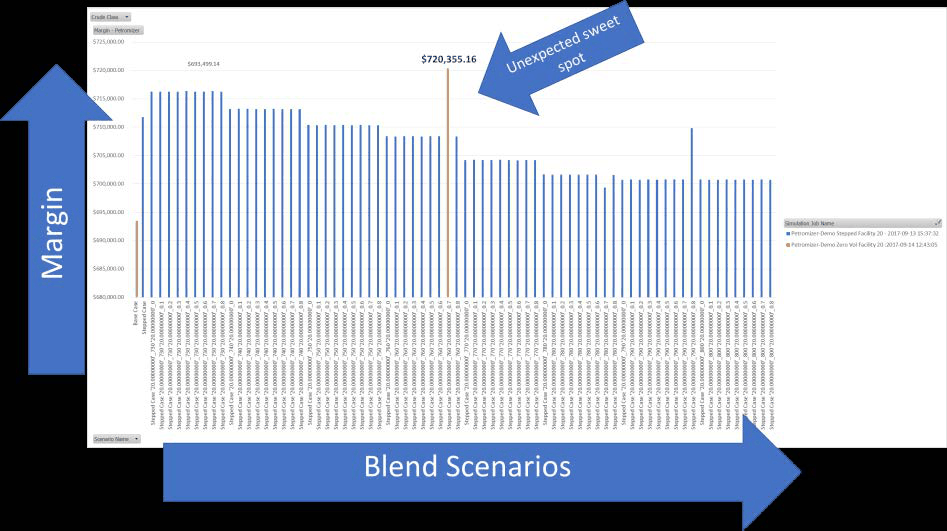
Blending optimization delivered $120k/month margin increase, sustained. Quality-spec adherence improved at the same time — the model was constrained, not unconstrained. Machine learning surfaced optimized cases and the automation found “sweet spot” operating cases the team had not tested.